




Rona Tutt OBE, former president of NAHT and chair of the National Forum for Neuroscience and Special Education (NFNSE), explores how schools can support every kind of mind in the classroom.

Understanding neurodiversity

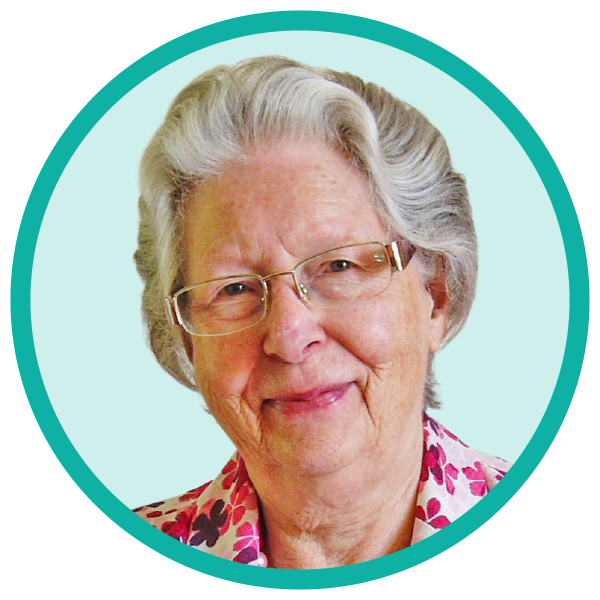
RONA TUTT OBE,
FORMER PRESIDENT OF NAHT AND CHAIR OF THE NFNSE
Every classroom is neurodiverse, to a greater or lesser extent. The question for school leaders and their teaching staff, therefore, is this: how well do they recognise, celebrate and respond to the range of learners in their care?

FRANCESCA HAPPÉ,
PROFESSOR OF COGNITIVE NEUROSCIENCE AT KING’S COLLEGE LONDON
‘Neurodiversity’ is a term most NAHT members will, of course, be very familiar with – you’re dealing with it day in, day out, after all. Yet, as Francesca Happé, professor of cognitive neuroscience at King’s College London, explains, neurodiversity is also often misunderstood.
It’s not simply a label for a group of pupils, but the recognition that every brain is different, with neurotypical and neurodivergent minds forming part of the same natural spectrum.
The term, to recap, was coined by sociologist Judy Singer, who is herself on the autism spectrum.
“It describes the whole range of different minds and brains that naturally occur, just as ‘ecological diversity’ describes the whole range of living things. Neurodiversity encompasses both the ‘neurotypical’ mind/person and the many different sorts of ‘neurodivergent’ minds/people,” says Francesca.
“‘Neurotypical’, in this context, refers to ‘the average’, in other words, the majority or most typical way of thinking and processing the world.
“‘Neurodivergent’, conversely, refers to minds that differ from this typical way of thinking. Neurodivergence includes autism, attention deficit/hyperactivity disorder (ADHD), dyslexia, developmental coordination disorder, dyscalculia and probably many other variations in thinking and learning styles for which we don’t have diagnostic labels.
“While people sometimes talk about people with these diagnoses as being ‘neurodiverse’, in fact, we are all – whether neurotypical or neurodivergent – part of the neurodiversity of minds. So, people with a diagnosis of autism, ADHD and so on are instead ‘neurodivergent’, in contrast to the neurotypical,” she adds.
“Neurodiversity within the classroom is about emphasising that the many different minds are all equally valid and worthy of respect. Just as one can’t say a parrot is ‘better’ than a penguin, so one can’t say that a neurotypical mind is better than a neurodivergent one.
“Like parrots and penguins, each may have different strengths and weaknesses, or flourish in different settings, but everyone has something to learn and something to give,” she reflects.




Understanding neurodiversity
RONA TUTT OBE,
FORMER PRESIDENT OF NAHT AND CHAIR OF THE NFNSE
Every classroom is neurodiverse, to a greater or lesser extent. The question for school leaders and their teaching staff, therefore, is this: how well do they recognise, celebrate and respond to the range of learners in their care?
FRANCESCA HAPPÉ,
PROFESSOR OF COGNITIVE NEUROSCIENCE AT KING’S COLLEGE LONDON
‘Neurodiversity’ is a term most NAHT members will, of course, be very familiar with – you’re dealing with it day in, day out, after all. Yet, as Francesca Happé, professor of cognitive neuroscience at King’s College London, explains, neurodiversity is also often misunderstood.
It’s not simply a label for a group of pupils, but the recognition that every brain is different, with neurotypical and neurodivergent minds forming part of the same natural spectrum.
The term, to recap, was coined by sociologist Judy Singer, who is herself on the autism spectrum.


“It describes the whole range of different minds and brains that naturally occur, just as ‘ecological diversity’ describes the whole range of living things. Neurodiversity encompasses both the ‘neurotypical’ mind/person and the many different sorts of ‘neurodivergent’ minds/people,” says Francesca.
“‘Neurotypical’, in this context, refers to ‘the average’, in other words, the majority or most typical way of thinking and processing the world.
“‘Neurodivergent’, conversely, refers to minds that differ from this typical way of thinking. Neurodivergence includes autism, attention deficit/hyperactivity disorder (ADHD), dyslexia, developmental coordination disorder, dyscalculia and probably many other variations in thinking and learning styles for which we don’t have diagnostic labels.
“While people sometimes talk about people with these diagnoses as being ‘neurodiverse’, in fact, we are all – whether neurotypical or neurodivergent – part of the neurodiversity of minds. So, people with a diagnosis of autism, ADHD and so on are instead ‘neurodivergent’, in contrast to the neurotypical,” she adds.
“Neurodiversity within the classroom is about emphasising that the many different minds are all equally valid and worthy of respect. Just as one can’t say a parrot is ‘better’ than a penguin, so one can’t say that a neurotypical mind is better than a neurodivergent one.
“Like parrots and penguins, each may have different strengths and weaknesses, or flourish in different settings, but everyone has something to learn and something to give,” she reflects.




Hidden language barriers in the classroom

COURTENAY NORBURY,
PROFESSOR OF DEVELOPMENTAL LANGUAGE AND COMMUNICATION DISORDERS AT UNIVERSITY COLLEGE LONDON
As Courtenay Norbury, professor of developmental language and communication disorders at University College London, highlights, there is a further challenge here for school leaders and teachers around language.
“Language difficulties are one of the most common hidden barriers to learning, yet they often go unnoticed in classrooms. For educators, this means that pupils who struggle to follow instructions or engage in lessons may not lack ability; they may simply need support to communicate and understand,” she explains.
“Drilling down into this in more detail, language difficulties are a common feature of many neurodivergent conditions, including developmental language disorder (DLD). DLD affects approximately 7.5% of school-age children, with an additional 2.3% experiencing language disorder in association with another condition, such as autism or a learning disability.
“Children with language disorders tend to speak less, take longer to formulate utterances and, when they do talk, use short sentences with simple grammar and limited vocabulary. They may also struggle to understand and remember what other people say to them. These language difficulties may be mistaken for not following directions, poor attention, belligerence or forgetfulness,” she continues.
“Language, of course, is the foundation for literacy, the primary means through which we develop social networks and relationships, and the medium through which almost all classroom learning takes place. Research has demonstrated a two- to three-year ‘language gap’ between those with language disorders and their peers, making it difficult for many students with DLD to access learning and increasing the risk for adverse mental health.
“School staff, in sum, have an important role to play in creating a language-rich and communication-friendly environment. Slowing the pace of language, using visual cues and checking understanding are great ways to support the needs of young people with language disorders,” adds Courtenay.


Hidden language barriers in the classroom
COURTENAY NORBURY,
PROFESSOR OF DEVELOPMENTAL LANGUAGE AND COMMUNICATION DISORDERS AT UNIVERSITY COLLEGE LONDON
As Courtenay Norbury, professor of developmental language and communication disorders at University College London, highlights, there is a further challenge here for school leaders and teachers around language.
“Language difficulties are one of the most common hidden barriers to learning, yet they often go unnoticed in classrooms. For educators, this means that pupils who struggle to follow instructions or engage in lessons may not lack ability; they may simply need support to communicate and understand,” she explains.
“Drilling down into this in more detail, language difficulties are a common feature of many neurodivergent conditions, including developmental language disorder (DLD). DLD affects approximately 7.5% of school-age children, with an additional 2.3% experiencing language disorder in association with another condition, such as autism or a learning disability.


“Children with language disorders tend to speak less, take longer to formulate utterances and, when they do talk, use short sentences with simple grammar and limited vocabulary. They may also struggle to understand and remember what other people say to them. These language difficulties may be mistaken for not following directions, poor attention, belligerence or forgetfulness,” she continues.
“Language, of course, is the foundation for literacy, the primary means through which we develop social networks and relationships, and the medium through which almost all classroom learning takes place. Research has demonstrated a two- to three-year ‘language gap’ between those with language disorders and their peers, making it difficult for many students with DLD to access learning and increasing the risk for adverse mental health.
“School staff, in sum, have an important role to play in creating a language-rich and communication-friendly environment. Slowing the pace of language, using visual cues and checking understanding are great ways to support the needs of young people with language disorders,” adds Courtenay.






Whole-school approaches and neurodiversity champions
How, then, can school leaders and teaching staff address this? How can they best address these hidden language barriers that require systemic support? One route – and it is only one – is through whole-school approaches such as the Partnerships for Inclusion of Neurodiversity in Schools (PINS) project.
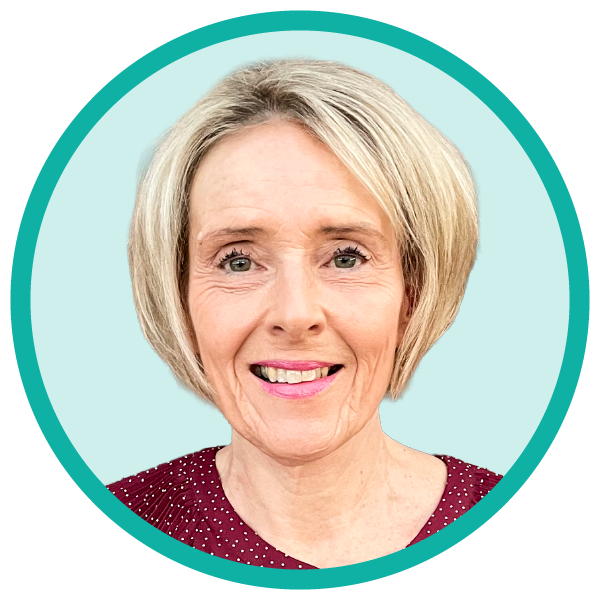
SIÂN DEANE,
SEVERN TRAINING AND SCHOOLS ALLIANCE
As Siân Deane from the Severn Training and Schools Alliance (where she serves as project manager for PINS) explains, the initiative is a joint project between NHS England and the Department for Education (DfE). It is funded by the DfE and forms an integral part of the Special Educational Needs and Disabilities (SEND) and Alternative Provision (AP) Change Programme.
“It is a multi-disciplinary approach with parent carer forums at the core. A total of 40 schools across each Integrated Care Board were supported in year one and 30 schools in year two.
“The purpose of PINS is to help shape whole-school SEND provision, provide early interventions at a school level, upskill school staff and support the strengthening of partnerships between schools and parent carers,” she says.
The programme covers the full range of neurodiversity, acknowledging any learning difference that may need an adaptation to enable a child to access school and learning. It is need rather than diagnosis-led.


The domains covered by PINS include the following:


One
Leadership, culture and values, including co-production and parental engagement
Two
Mental health

Three
Readiness to learn

Four
Teaching and learning

Five
The environment

Six
Communication
“The project brings health and education professionals together including parent carer forums, speech and language therapy, education psychology, occupational therapy, behaviour support advisory teams, specialist SEND outreach teachers, school nurses, and children and young people’s mental health services (CAMHS),” Siân explains.
In summary, whole-school approaches such as PINS show how leadership, culture and cross-professional collaboration can transform how neurodivergent pupils are supported.
PENNY BROADHURST,
SCHOOL LEADER AT PARK COMMUNITY SCHOOL IN HAMPSHIRE
Another solution is to embed ‘neurodiversity champions’. Penny Broadhurst, a school leader at Park Community School in Hampshire with a social work background, has been involved in training school staff to become neurodiversity champions through her role as an INclude practitioner. Penny explains: “Because of the increasing numbers of children being identified as neurodivergent, timely recognition and appropriate support depend on school staff having the right skills, knowledge and competences to identify and offer effective intervention.”
After seven years of working with these families and with CAMHS, the ‘INclude team’ had acquired the experience to help upskill staff.
In collaboration with CAMHS, Penny offered comprehensive training to staff at seven partner schools. The result was that 25 staff completed monthly sessions over the 2023/24 school year.
“This was followed this year by half-termly group supervision sessions. The purpose of the role is for trained staff to help their own school become more aware of neurodivergent needs. This will then inform practice and provide support to pupils to overcome barriers to learning and engagement,” she says.
“The impact so far has been staff adjusting expectations and environments and offering practical support to children and parents. Children and parents report feeling understood. Schools have become more receptive to welcoming advice and guidance from their knowledgeable staff. In addition, the interventions offered have led to increased engagement in learning and in attendance,” she adds.
“The aim is to grow designated time for the champion role and to develop a ‘buddy system’ so that children who are neurodivergent can learn how to support each other.”
In summary, while PINS shows the impact of whole-school collaboration and systemic approaches, the success of these initiatives ultimately depends on staff having the knowledge and confidence to put them into practice every day.
Developing this expertise is exactly the goal of the ‘neurodiversity champions’ initiative, in that it equips and enables staff to recognise and respond to neurodivergent pupils within their classrooms and across the school.



Tools, resources and final reflections
MARIJKE MILES,
HEAD TEACHER, BAYCROFT SCHOOL, FAREHAM
Finally, as Marijke Miles, head teacher at Baycroft School in Fareham, Hampshire, and chair of NAHT’s SEND and AP sector council, highlights, there can be real value for school leaders in using the NFNSE’s range of information sheets (see panel at the end).
“These translate cutting-edge research into clear guidance on a wide range of conditions, from DLD to trauma and anxiety, and offer strategies that can be applied immediately in classrooms and across school systems,” she explains.
“Each draws on expertise from the leading researchers and practitioners in their respective fields and is framed around a structure of key questions devised by education staff.”
They are titled ‘What teachers need to know about …’, therefore bringing to education settings practical strategies for supporting pupils, their families and the staff they work with.

Tools, resources and final reflections
MARIJKE MILES,
HEAD TEACHER, BAYCROFT SCHOOL, FAREHAM
Finally, as Marijke Miles, head teacher at Baycroft School in Fareham, Hampshire, and chair of NAHT’s SEND and AP sector council, highlights, there can be real value for school leaders in using the NFNSE’s range of information sheets (see panel at the end).


“These translate cutting-edge research into clear guidance on a wide range of conditions, from DLD to trauma and anxiety, and offer strategies that can be applied immediately in classrooms and across school systems,” she explains.
“Each draws on expertise from the leading researchers and practitioners in their respective fields and is framed around a structure of key questions devised by education staff.”
They are titled ‘What teachers need to know about …’, therefore bringing to education settings practical strategies for supporting pupils, their families and the staff they work with.

So far, there are information sheets on the following:

Acquired brain injury and traumatic brain injury

Anxiety

DLD

Foetal alcohol spectrum disorder

Pathological demand avoidance

Prematurity

Trauma and post-traumatic stress disorder
Use the button below to download these resources individually or as a full set, free of charge.
To conclude, we all know that neurodiversity is no longer a ‘fringe’ issue. It is the everyday reality in every classroom and needs to be addressed and managed as such, both day to day by teaching staff and more strategically by school leaders.
Educators who prioritise understanding and supporting diverse learners will shape schools where all pupils can thrive academically, socially and emotionally.


The NFNSE
The NFNSE works to bring together scientists, teachers and social care professionals to share knowledge and expertise on special education in the context of neuroscience.
It was founded in 2011 by Professor Barry Carpenter CBE, Professor Francesca Happé and Dr Rona Tutt OBE. It is independent but reports to NAHT’s SEND and AP sector council.
Its objectives are to:
• Encourage discourse around the changing pattern of childhood disability
• Share insights from both fields that lead to innovative practice and better learning outcomes for children
• Campaign on issues of interest to the forum, for example, better training for teachers, more support for students with mental health issues and greater flexibility in the school system over ages and class groups.


 Built with Shorthand