Curriculum reform:
What it means for school leaders




Curriculum reform:
What it means for school leaders


The Curriculum and Assessment Review sets out a bold vision for change. Turning that vision into a reality will require careful implementation, clear detail and sustained engagement with school leaders. Leadership Focus journalist Nic Paton takes a look.
Responding to Professor Becky Francis’s Curriculum and Assessment Review in November, education secretary Bridget Phillipson spelt out that schools must be “an epicentre of the strongest possible foundations of knowledge and of the skills to excel in the modern world”.
“From the fundamentals of reading to the present danger of spotting fake news, as part of our Plan for Change, these landmark reforms will help young people step boldly into the future, with the knowledge to achieve and the skills to thrive as the world around us continues to rapidly evolve,” she added.
Certainly, the speed at which the government responded – and accepted – Professor Francis’s recommendations can be taken as a positive sign that ministers are serious about effecting real change when it comes to the national curriculum.


Responding to Professor Becky Francis’s Curriculum and Assessment Review in November, education secretary Bridget Phillipson spelt out that schools must be “an epicentre of the strongest possible foundations of knowledge and of the skills to excel in the modern world”.


“From the fundamentals of reading to the present danger of spotting fake news, as part of our Plan for Change, these landmark reforms will help young people step boldly into the future, with the knowledge to achieve and the skills to thrive as the world around us continues to rapidly evolve,” she added.
Certainly, the speed at which the government responded – and accepted – Professor Francis’s recommendations can be taken as a positive sign that ministers are serious about effecting real change when it comes to the national curriculum.


Greater breadth of subjects


Key reforms include making citizenship compulsory in primary schools, with all pupils required to learn about: media and financial literacy; law and rights; democracy and government; and climate education.
The computer science GCSE will be replaced by a broader computing GCSE, and work will be undertaken to explore a new qualification in data science and artificial intelligence for 16–18-year-olds. The EBacc will be removed, and reforms will be made to Progress 8 “to encourage students to study a greater breadth of GCSE subjects, including the arts, humanities and languages alongside English, maths and science”, the Department for Education (DfE) said.
Schools, too, will be supported to develop a new triple science offer, while a new primary oracy framework and a new combined secondary oracy, reading and writing framework will also be developed.
At 197 pages, Professor Francis’s review is certainly comprehensive and a substantial document. The challenge, of course, for school leaders is that they will be the ones who have to make these aspirations a reality on the ground – and so will need proper time and space to implement and embed these changes.


SARAH HANNAFIN,
NAHT HEAD OF POLICY (PRACTICE AND RESEARCH)
This is something NAHT has been very clear on ever since the review process was launched in July 2024, shortly after Labour came to power following the General Election, as NAHT head of policy (practice and research) Sarah Hannafin emphasises.
“NAHT has, of course, been involved throughout,” she says. “We submitted a comprehensive response to the call for evidence on behalf of members. The interim report of the review was then published in March last year, with the final review and recommendations following last November.
“There are some really good things in here from our perspective. For example, the recognition that the current national curriculum is overcrowded. Plus, that there needs to be sufficient space within the school day for teachers to do other things beyond the national curriculum. The need to avoid that constant pushing through content all of the time; we’re glad all that has been recognised. Although we do still need clarity on what a lot of this will look like in practice,” Sarah adds.





Key reforms include making citizenship compulsory in primary schools, with all pupils required to learn about: media and financial literacy; law and rights; democracy and government; and climate education.
The computer science GCSE will be replaced by a broader computing GCSE, and work will be undertaken to explore a new qualification in data science and artificial intelligence for 16–18-year-olds. The EBacc will be removed, and reforms will be made to Progress 8 “to encourage students to study a greater breadth of GCSE subjects, including the arts, humanities and languages alongside English, maths and science”, the Department for Education (DfE) said.


Schools, too, will be supported to develop a new triple science offer, while a new primary oracy framework and a new combined secondary oracy, reading and writing framework will also be developed.
At 197 pages, Professor Francis’s review is certainly comprehensive and a substantial document. The challenge, of course, for school leaders is that they will be the ones who have to make these aspirations a reality on the ground – and so will need proper time and space to implement and embed these changes.
SARAH HANNAFIN,
NAHT HEAD OF POLICY (PRACTICE AND RESEARCH)
This is something NAHT has been very clear on ever since the review process was launched in July 2024, shortly after Labour came to power following the General Election, as NAHT head of policy (practice and research) Sarah Hannafin emphasises.
“NAHT has, of course, been involved throughout,” she says. “We submitted a comprehensive response to the call for evidence on behalf of members. The interim report of the review was then published in March last year, with the final review and recommendations following last November.
“There are some really good things in here from our perspective. For example, the recognition that the current national curriculum is overcrowded. Plus, that there needs to be sufficient space within the school day for teachers to do other things beyond the national curriculum. The need to avoid that constant pushing through content all of the time; we’re glad all that has been recognised. Although we do still need clarity on what a lot of this will look like in practice,” Sarah adds.



Review of national curriculum programmes


Review of national curriculum programmes
Hopefully, adding clarity will be the next step. A raft of national curriculum programmes of study is being reviewed and redrafted, with curriculum drafters appointed. They will work to create revised programmes of study for every national curriculum subject. It is expected that these will be published for consultation during the summer. “Members will, therefore, have an opportunity to look at those and comment on them before they are finalised,” says Sarah.
Once this process is completed, final versions will then be published by Easter 2027, after which schools will have until September 2028 to implement the changes.
“So schools will have – or should have – four terms from next Easter to put in place those new programmes of study. That was something we pushed really hard in our meetings with the department – that school leaders needed at least a year to prepare for implementation – so we are pleased it has been accepted,” Sarah emphasises.
While a lot has been achieved, the key message for members as we look towards the summer consultation is that there is still much to reflect on, discuss and feed into this process.


Hopefully, adding clarity will be the next step. A raft of national curriculum programmes of study is being reviewed and redrafted, with curriculum drafters appointed. They will work to create revised programmes of study for every national curriculum subject. It is expected that these will be published for consultation during the summer. “Members will, therefore, have an opportunity to look at those and comment on them before they are finalised,” says Sarah.


Once this process is completed, final versions will then be published by Easter 2027, after which schools will have until September 2028 to implement the changes.
“So schools will have – or should have – four terms from next Easter to put in place those new programmes of study. That was something we pushed really hard in our meetings with the department – that school leaders needed at least a year to prepare for implementation – so we are pleased it has been accepted,” Sarah emphasises.
While a lot has been achieved, the key message for members as we look towards the summer consultation is that there is still much to reflect on, discuss and feed into this process.
Implementation timeframes


Spring 2027:
National curriculum published

September 2028:
First teaching of
new national curriculum

September 2029:
First teaching
of phase one GCSEs
Summer 2031: First exams

September 2030:
First teaching
of phase two GCSEs
Summer 2032: First exams

September 2031:
First teaching
of phase one A levels
Summer 2033: First exams

September 2032:
First teaching
of phase two A levels
Summer 2034: First exams
Implementation timeframes
Spring 2027:
National curriculum published
September 2028:
First teaching of
new national curriculum
September 2029:
First teaching
of phase one GCSEs
Summer 2031: First exams
September 2030:
First teaching
of phase two GCSEs
Summer 2032: First exams
September 2031:
First teaching
of phase one A levels
Summer 2033: First exams
September 2032:
First teaching
of phase two A levels
Summer 2034: First exams

Concerns still
outstanding


Concerns still
outstanding
For example, while some changes, such as scrapping the EBacc, are ones NAHT has campaigned on for years, in other areas the direction of travel is less clear. Religious education, for one, is still a work in progress, with a task-and-finish group chaired by Dr Vanessa Ogden working towards a future consensus.
Concerns remain about the recommendations to amend the grammar, punctuation and spelling test and to consider the accessibility of other primary tests, with NAHT arguing that it is “immensely disappointing” that the opportunity has been missed to reduce unnecessary primary school tests. “These take up a disproportionate amount of time and place enormous strain on children and teachers for little obvious benefit,” says Sarah.
Equally, the recommendation for diagnostic assessments in English and maths during year eight has led the government to announce a year eight reading test. This is, Sarah argues, “a much more simplified and blunt approach than that proposed by the review. NAHT doesn’t support the introduction of this test”.
“We continue to engage with the government and other relevant organisations on the implementation of these recommendations and are pressing to ensure schools and colleges are provided with the time and resources they need,” she adds.
The DfE’s plans for pupil enrichment, something not within the scope of the review itself and bolted on by ministers in their response, have also raised alarm bells. The government has proposed introducing a national enrichment entitlement for all pupils, based on a core offer that provides access to civic engagement; arts and culture; nature, outdoor and adventure activities; sport and physical activities; and wider life skills. Ofsted will also consider enrichment when judging personal development.
“These proposals are extremely concerning in terms of the potential additional expectations that the DfE is suggesting be placed on schools and the accountability attached to them,” Sarah cautions, adding that the government’s aspirations conflate enrichment of the curriculum with a school’s extra-curricular offer.
“NAHT continues to engage with the government to strongly express members’ concerns and influence the policy decisions being made,” she adds.
To that end, this summer’s consultation process is likely to be critical to the profession’s continuing ability to make its voice heard and a vital opportunity to shape this important reform agenda.
“There are some really positive things in this review, which we were calling for, that have come through. But, as expected, there are areas of disappointment,” says Sarah in conclusion.
“The consultation process is when members will have an opportunity to say, ‘This is good’, ‘This is not good’, ‘This won’t fit into the teaching time for the subject’ and so on. So, watch this space for more details about how to have your say,” she adds.





For example, while some changes, such as scrapping the EBacc, are ones NAHT has campaigned on for years, in other areas the direction of travel is less clear. Religious education, for one, is still a work in progress, with a task-and-finish group chaired by Dr Vanessa Ogden working towards a future consensus.
Concerns remain about the recommendations to amend the grammar, punctuation and spelling test and to consider the accessibility of other primary tests, with NAHT arguing that it is “immensely disappointing” that the opportunity has been missed to reduce unnecessary primary school tests. “These take up a disproportionate amount of time and place enormous strain on children and teachers for little obvious benefit,” says Sarah.
Equally, the recommendation for diagnostic assessments in English and maths during year eight has led the government to announce a year eight reading test. This is, Sarah argues, “a much more simplified and blunt approach than that proposed by the review. NAHT doesn’t support the introduction of this test”.


“We continue to engage with the government and other relevant organisations on the implementation of these recommendations and are pressing to ensure schools and colleges are provided with the time and resources they need,” she adds.
The DfE’s plans for pupil enrichment, something not within the scope of the review itself and bolted on by ministers in their response, have also raised alarm bells. The government has proposed introducing a national enrichment entitlement for all pupils, based on a core offer that provides access to civic engagement; arts and culture; nature, outdoor and adventure activities; sport and physical activities; and wider life skills. Ofsted will also consider enrichment when judging personal development.
“These proposals are extremely concerning in terms of the potential additional expectations that the DfE is suggesting be placed on schools and the accountability attached to them,” Sarah cautions, adding that the government’s aspirations conflate enrichment of the curriculum with a school’s extra-curricular offer.
“NAHT continues to engage with the government to strongly express members’ concerns and influence the policy decisions being made,” she adds.
To that end, this summer’s consultation process is likely to be critical to the profession’s continuing ability to make its voice heard and a vital opportunity to shape this important reform agenda.
“There are some really positive things in this review, which we were calling for, that have come through. But, as expected, there are areas of disappointment,” says Sarah in conclusion.
“The consultation process is when members will have an opportunity to say, ‘This is good’, ‘This is not good’, ‘This won’t fit into the teaching time for the subject’ and so on. So, watch this space for more details about how to have your say,” she adds.
Further reading

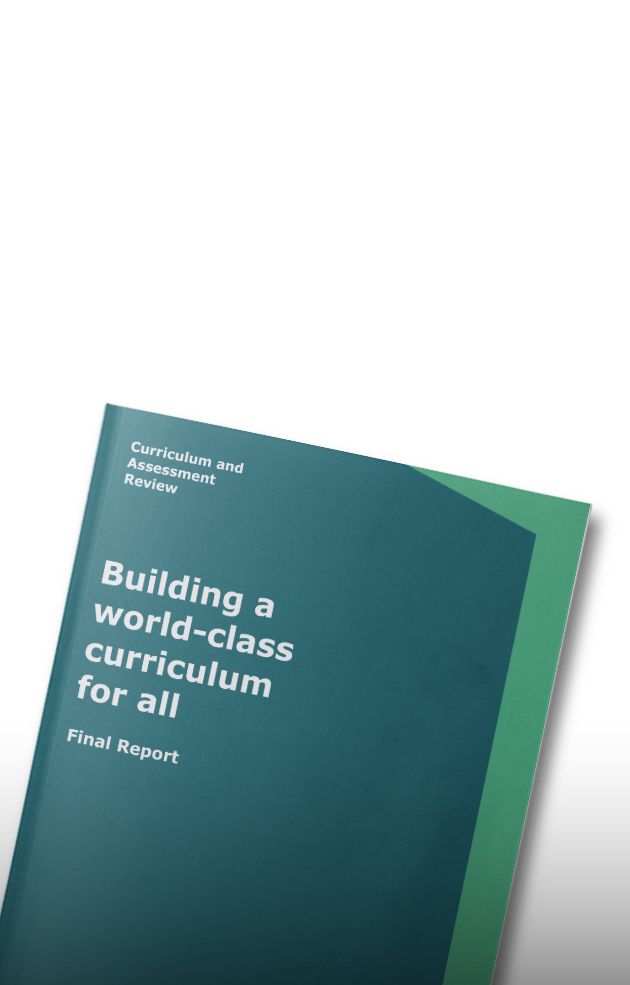

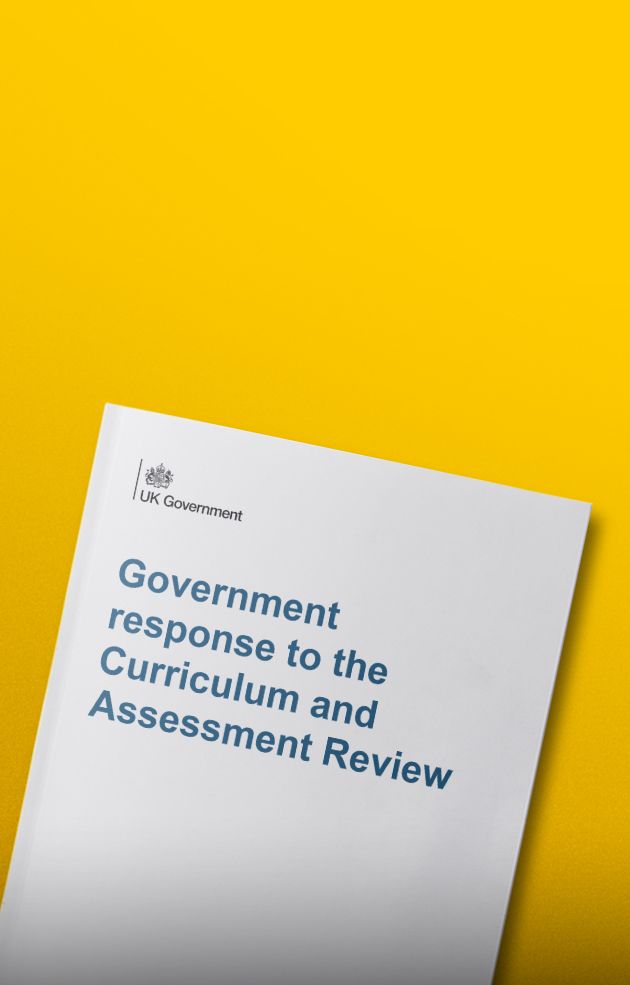
The government’s response to the Curriculum and Assessment Review Final Report can be read here:
 Built with Shorthand