





















Drawing on insights from NAHT’s advice and policy experts, Leadership Focus journalist Nic Paton examines why relationship pressures are intensifying, how blurred boundaries and exhaustion can contribute to breakdowns and why reaching out early for support can make a significant difference.
When pressure breaks leadership
It’s often said that people don’t leave a job; they leave a bad or toxic manager, colleague or environment.


PAUL WHITEMAN,
NAHT GENERAL SECRETARY
Or, as NAHT general secretary Paul Whiteman puts it: “Education is a people business. However, nowadays, we’re too often seeing good bosses – good school leaders – leave what is, increasingly, a bad, unsustainable job. There is such pressure and such intensity in school leadership that, if you’re not careful, people end up wearing each other down. No one has any time to be ‘human’ anymore.”
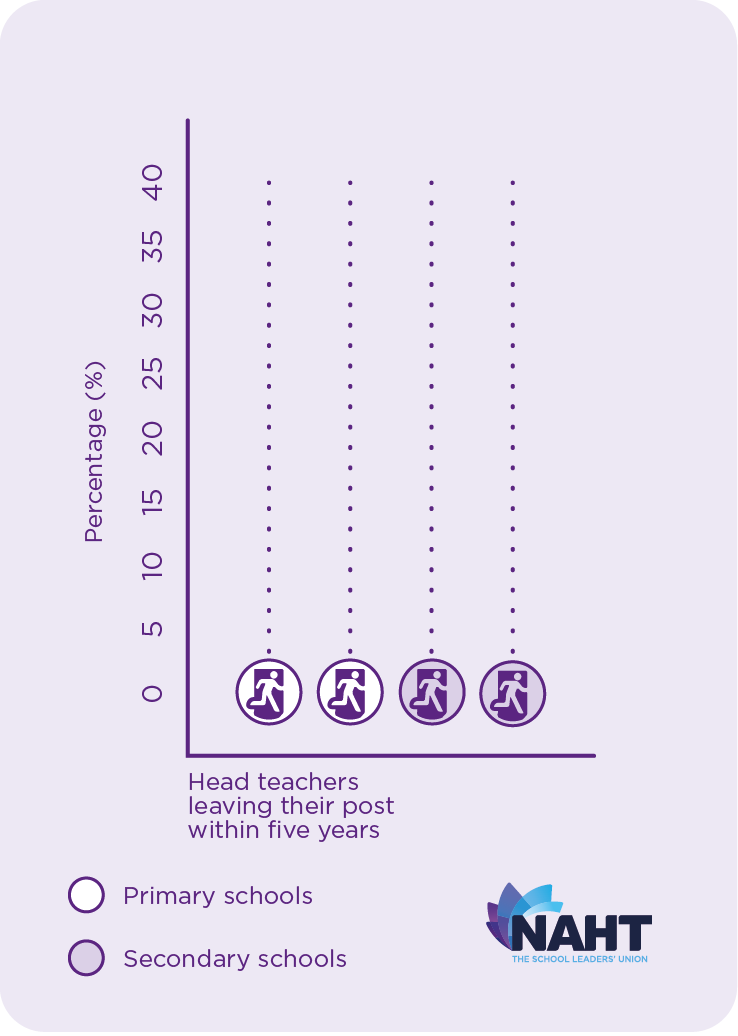
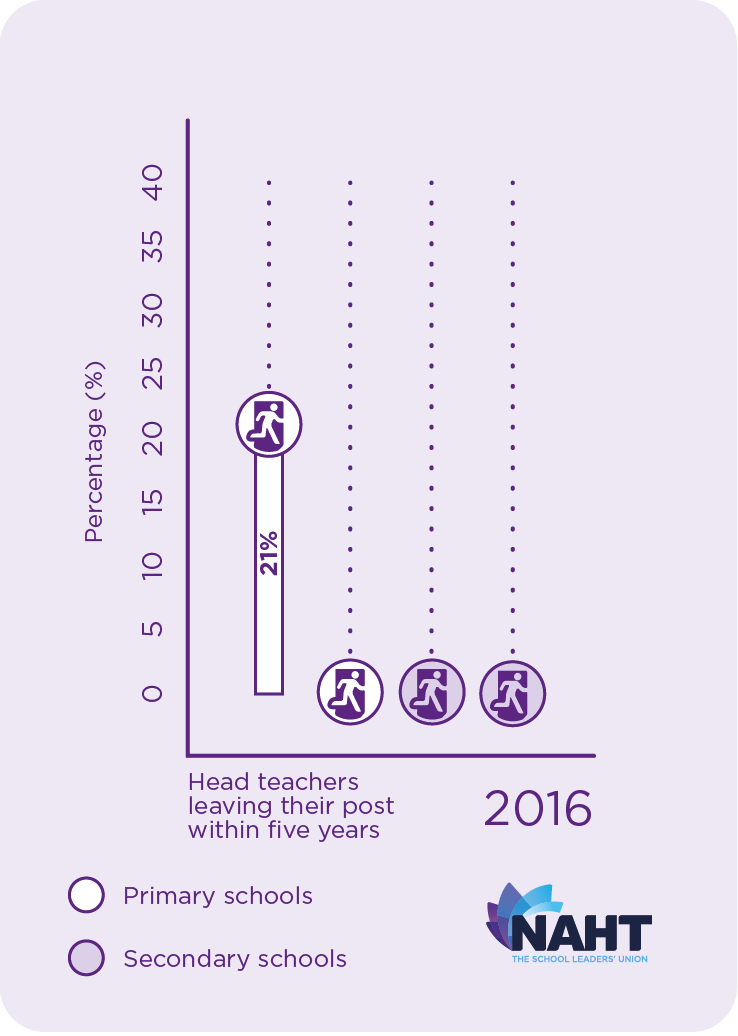
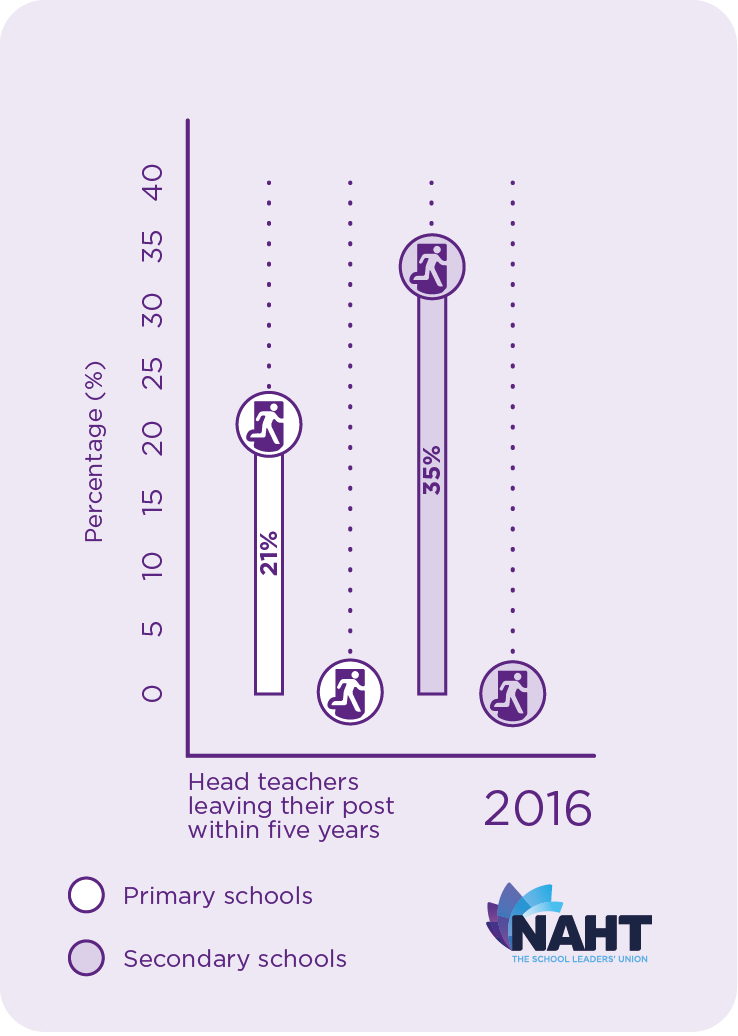
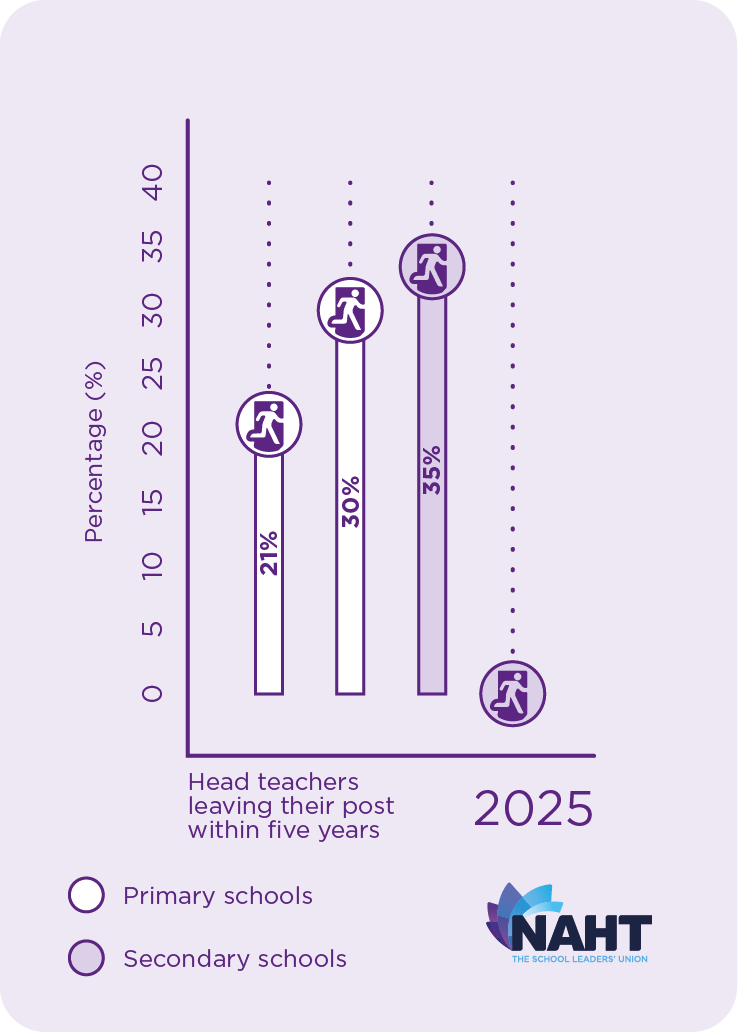
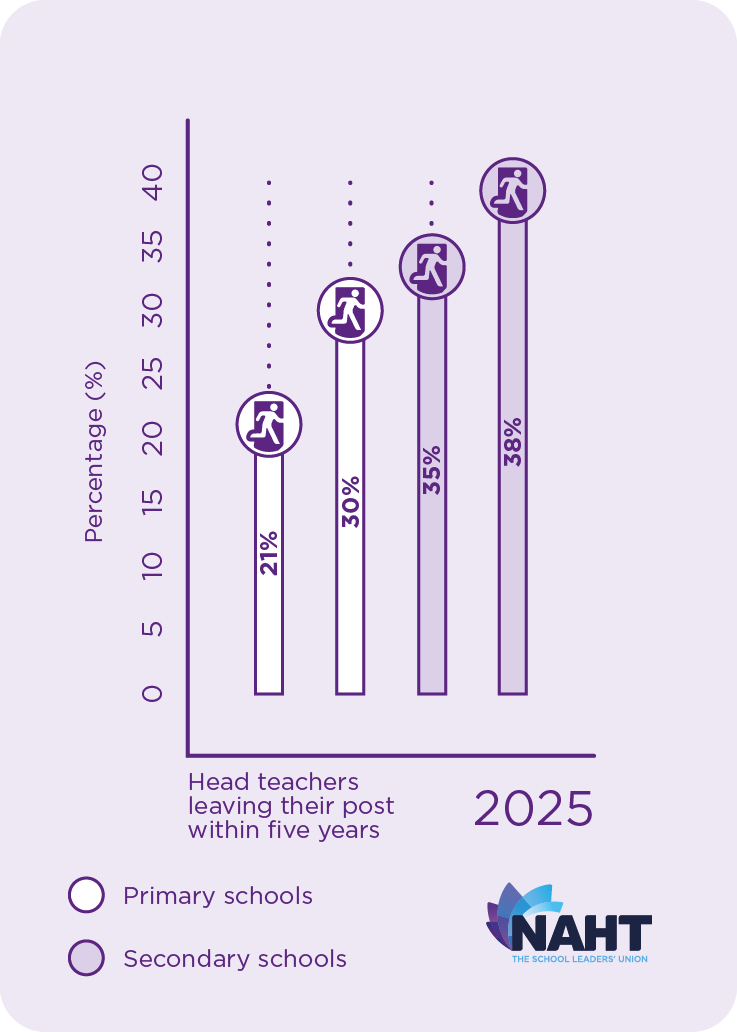
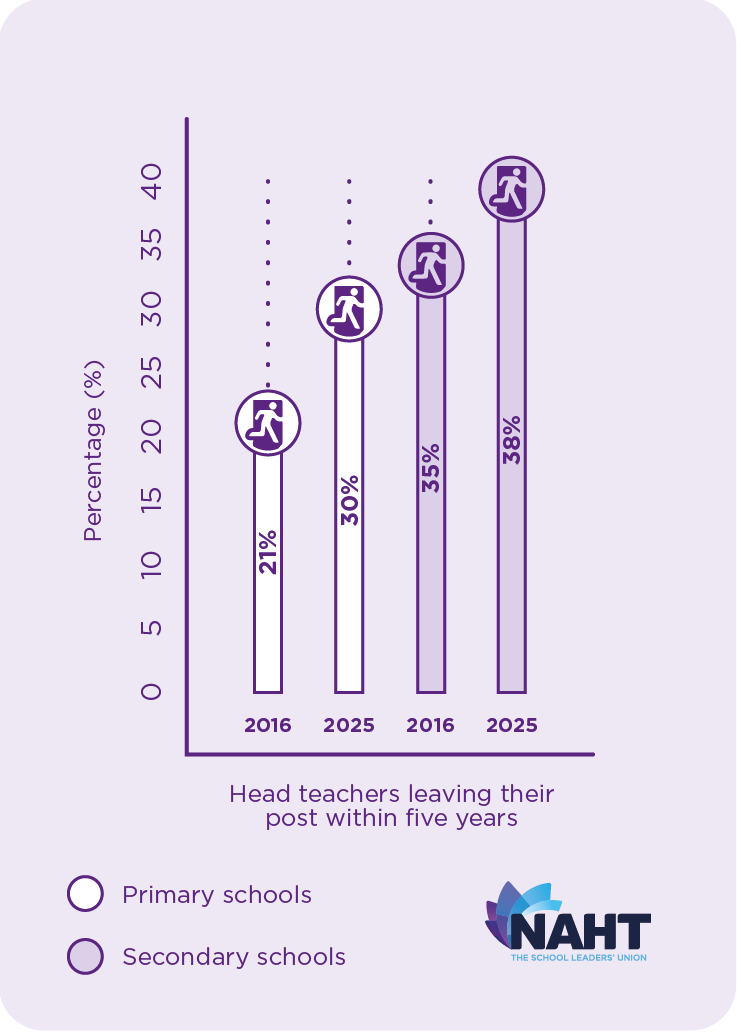
This – what we might term a ‘spiral of doom’ when it comes to professional relationships – was highlighted only too vividly last autumn when an NAHT data analysis concluded that the proportion of primary school head teachers leaving their post within five years had soared from 21% in 2016 to nearly a third (30%). The situation, NAHT found, was even worse in secondary schools, with 38% of head teachers quitting within five years of taking up the role (up from 35% in 2016).
“You can find yourself trying to cope – and lead – in an environment where people are constantly exhausted and under pressure, only having short conversations and even snapping at each other, rather than being able to build deep relationships or supportive environments. It can become a vicious circle, often to the point where relationships break down, which is no good for school leaders or the children in their care,” Paul adds.


When pressure breaks leadership
It’s often said that people don’t leave a job; they leave a bad or toxic manager, colleague or environment.
PAUL WHITEMAN,
NAHT GENERAL SECRETARY
Or, as NAHT general secretary Paul Whiteman puts it: “Education is a people business. However, nowadays, we’re too often seeing good bosses – good school leaders – leave what is, increasingly, a bad, unsustainable job. There is such pressure and such intensity in school leadership that, if you’re not careful, people end up wearing each other down. No one has any time to be ‘human’ anymore.”
This – what we might term a ‘spiral of doom’ when it comes to professional relationships – was highlighted only too vividly last autumn when an NAHT data analysis concluded that the proportion of primary school head teachers leaving their post within five years had soared from 21% in 2016 to nearly a third (30%). The situation, NAHT found, was even worse in secondary schools, with 38% of head teachers quitting within five years of taking up the role (up from 35% in 2016).

“You can find yourself trying to cope – and lead – in an environment where people are constantly exhausted and under pressure, only having short conversations and even snapping at each other, rather than being able to build deep relationships or supportive environments. It can become a vicious circle, often to the point where relationships break down, which is no good for school leaders or the children in their care,” Paul adds.
The role of professional relationships



KATE ATKINSON,
NAHT NATIONAL SECRETARY (ADVICE)
Broken or misfiring professional relationships won’t, of course, be the only reasons for these departures – but they certainly don’t help. Moreover, as NAHT national secretary (advice) Kate Atkinson tells Leadership Focus, managing and navigating professional relationships is something school leaders are increasingly having to deal with. This is evidenced by the rate at which members are now reaching out to NAHT’s advice team for support.
“It is getting worse. More members are reaching out to the advice team because of relationship breakdowns in their schools,” she says.

JAMES BOWEN,
NAHT ASSISTANT GENERAL SECRETARY
NAHT assistant general secretary James Bowen agrees. “When I speak to the advice team about what this week’s calls have been about, nearly always in the top three is the breakdown of relationships, especially in December and February when people are tired, stressed or feeling a bit burned out,” he points out.
“I think it is fair to say that managing relationships is probably one of the most stressful aspects of being a school leader. It is definitely one of the things that keeps you awake at night.
“Managing relationships, whether between people you manage, peers or the person you report to, is difficult. When relationships break down, it can have a really damaging effect on people and cause quite serious harm. It is perhaps obvious, but the most crucial thing is to take action early. Not to let things develop too far, because the further things go, the harder that relationship is to repair,” James adds.
Skill gaps and professional challenges


One issue here is that people-management (line-management) skills in education are too often overlooked when preparing people to step into leadership roles. The National Professional Qualification for Headship (NPQH), he highlights, is focused much more on the technical aspects of school leadership than on managing and leading teams of people day in and day out.
“We would like to see the NPQH being broadened,” James says. “A far greater proportion of the time should be spent on things like managing relationships. We don’t focus enough on what some people call, perhaps a little disparagingly, the ‘soft’ skills. They are not soft at all; they are some of the most challenging skills to get right. Devoting more time to the interpersonal side of leadership is, I feel, time really well spent.”
For head teachers, ‘people relationships’ nowadays operate both upwards and downwards, emphasises Kate. In other words, this is about managing your senior leadership team but also, increasingly, managing the relationship with your academy’s or trust’s CEO or leaders, or your governing body. This can, however, become more challenging if the hierarchy or accountability structures begin to blur.
“School environments create close working relationships, and most of the time this creates a great result, but when relationships become blurred between what is a personal friendship and a professional relationship, things can get difficult. If a senior leader is seen as a ‘friend’ and then has to do something like performance management, it can feel worse and more unfair to the person who is being managed – this perceived unfairness can exacerbate relationship breakdowns,” she says.
Acting early and seeking support


“Making sure that working relationships, particularly if you’re a line manager, maintain that professional edge can help preserve relationships in the long run. Relationships in schools do sometimes break down for very valid reasons. Sometimes people do behave badly; being on the receiving end of this bad behaviour can be awful, and it may need to be addressed in a professional but proactive way,” Kate tells Leadership Focus.
“The relationship with governors can be a big one, too; if you can keep a good relationship with your governors, it makes your life significantly easier. The advice team often speaks to members where the relationships with governors have broken down, and it can make life very difficult for school leaders – putting in effort to maintain a good relationship is certainly worth it because, once that relationship is destroyed, it is really quite difficult to get back,” she adds.

LIAM MCILVENNY,
NAHT SPECIALIST ADVISER
“The phrase we hear quite regularly is, ‘I should have rung you earlier’,” agrees NAHT specialist adviser Liam McIlvenny. “For many members, even just ringing the advice team can feel like a badge of shame, that they have somehow ‘failed’. So one message we’d like to make very clear here is that reaching out for help or advice is perfectly normal.
“Being a school leader, especially a head teacher, can be a very lonely place. You can’t always talk to your governors or even colleagues on the senior leadership team about issues or what is upsetting you,” he adds.
Acting or intervening early, to echo James’s earlier point, is absolutely critical. “It is often much easier to repair relationships if you tackle the breakdown early,” Kate advises. “It becomes very difficult when you’ve had, say, six months of people feeling aggrieved, upset and angry. Or if you haven’t let someone know that a particular type of behaviour is not appropriate.
“Our experience is that by going in early and being very clear about expectations, you can do it much more kindly and can often avoid formal employment processes. You don’t have to load up your bazooka and fire the big shots; you can get things back on track – usually, although not always – to a better point sooner rather than later.”


Tools, advice and support resources


Regaining control and addressing core issues
“These can be difficult phone calls,” agrees NAHT specialist adviser Lindsay Ruigrok. “The relationship difficulty can become embedded in a ‘situation’, and the member may feel at the end of their tether, believing there is nothing they can do to deal with this challenge, which may be having quite a negative impact on their well-being and the well-being of others. We aim to help our members feel back in some form of control.

LINDSAY RUIGROK,
NAHT SPECIALIST ADVISER
“It is about helping people realise there is something they can do; that this is not just a situation happening to them, but one they can actually influence and regain a measure of control over. In our calls, we often try to identify where our members can regain control of the situation and feel less helpless.
“Obviously every situation is different but, in the advice team, we are often able to suggest tools and solutions that our members may not have thought of. We work with our members to help identify a plan for the situation. They will often know the answers or the path already, but may have lost confidence because of the challenging situation; so, they just need somebody to say, ‘That is a good idea’ or ‘That is a good way forward’,” Lindsay adds.
“Sometimes, in these conversations, we can help unpick the core issue,” Kate agrees. “Because sometimes these things have merged over time; there are lots of peripheral things that don’t matter, which can be put to bed. So, it can be about helping the member let go of things emotionally. You focus the conversation on the element or behaviour that is not appropriate or needs to change and that can be addressed practically and legitimately.”
And remember that while NAHT and its advice team are there to help, it is important to recognise that your school’s or trust’s HR team is – or should be – a resource to lean on in these scenarios.
Practical tips and documentation
What tips, advice or tools would the advice team recommend when managing a difficult relationship? “Ask all the time, ‘Am I acting reasonably?’” advises Lindsay.
Keep clear and copious notes and records, advises Kate. “Set up a file, contact NAHT early, reflect on the school’s policy and rely on it,” she says.
“Start at the beginning and document everything; tick every box. Review your actions against your policy or processes,” agrees Lindsay, adding that using the ‘situation, complication, resolution, action, politeness’ (SCRAP) format within emails or other communication can often help.
It is very helpful after a meeting to send a brief, polite follow-up email outlining the agreed actions or outcomes. These can also serve as a useful record of your reasonable behaviour.
“It can be about reminding people, ‘You are the boss here’,” says Liam. “It can also be about saying, ‘Let’s compartmentalise this; let’s break it down into its different sections’,” he advises.
“So, is it performance management, capability, disciplinary and conduct issues, relationship problems and so on? And then you can start to put together the potential solutions,” Liam adds.
Support, training and informal resources
Finally, while formal training can help by giving school leaders tools and strategies to manage people and relationships more effectively – and greater confidence – it is also important to recognise the value of informal resources, James highlights.
For example, his early comments about December and February being common stress or pinch points. “If we know those pinch points are there, what more can we actively do to protect and support people?” he questions.
“We probably can’t stop relationships breaking down, especially when people are feeling stressed or burned out, but we can probably be doing more to check in on people, just asking how people are and so on. And this doesn’t necessarily cost money.
“Equally, there are lots of books, tools and podcasts out there that can help with things like managing difficult conversations or giving honest and open feedback in a constructive way.
“While there can certainly be an argument for schools to invest in some formal training for their leaders and managers, which will help, I wouldn’t want the financial side of it to be a barrier. There is a range of existing resources out there that people can tap into that they may well find helpful,” James adds.
Just carving out the time and space to learn, talk and reflect can help, agrees Paul in conclusion, with NAHT branch meetings often serving as a useful forum and conduit for support, much like the advice team does.
“In the many conversations we have, it is very common for a member to say to whoever has given them advice, ‘Thanks very much. I don’t need you to do anything about this; I just needed someone to hear me’,” he says.
“We all know being a school leader can often feel lonely. So, it can be as simple as someone reminding you that you are a good professional, you know what you’re doing and you’re making the right decisions,” Paul adds.






Regaining control and addressing core issues
“These can be difficult phone calls,” agrees NAHT specialist adviser Lindsay Ruigrok. “The relationship difficulty can become embedded in a ‘situation’, and the member may feel at the end of their tether, believing there is nothing they can do to deal with this challenge, which may be having quite a negative impact on their well-being and the well-being of others. We aim to help our members feel back in some form of control.
LINDSAY RUIGROK,
NAHT SPECIALIST ADVISER
“It is about helping people realise there is something they can do; that this is not just a situation happening to them, but one they can actually influence and regain a measure of control over. In our calls, we often try to identify where our members can regain control of the situation and feel less helpless.
“Obviously every situation is different but, in the advice team, we are often able to suggest tools and solutions that our members may not have thought of. We work with our members to help identify a plan for the situation. They will often know the answers or the path already, but may have lost confidence because of the challenging situation; so, they just need somebody to say, ‘That is a good idea’ or ‘That is a good way forward’,” Lindsay adds.
“Sometimes, in these conversations, we can help unpick the core issue,” Kate agrees. “Because sometimes these things have merged over time; there are lots of peripheral things that don’t matter, which can be put to bed. So, it can be about helping the member let go of things emotionally. You focus the conversation on the element or behaviour that is not appropriate or needs to change and that can be addressed practically and legitimately.”
And remember that while NAHT and its advice team are there to help, it is important to recognise that your school’s or trust’s HR team is – or should be – a resource to lean on in these scenarios.

Practical tips and documentation
What tips, advice or tools would the advice team recommend when managing a difficult relationship? “Ask all the time, ‘Am I acting reasonably?’” advises Lindsay.
Keep clear and copious notes and records, advises Kate. “Set up a file, contact NAHT early, reflect on the school’s policy and rely on it,” she says.
“Start at the beginning and document everything; tick every box. Review your actions against your policy or processes,” agrees Lindsay, adding that using the ‘situation, complication, resolution, action, politeness’ (SCRAP) format within emails or other communication can often help.
It is very helpful after a meeting to send a brief, polite follow-up email outlining the agreed actions or outcomes. These can also serve as a useful record of your reasonable behaviour.
“It can be about reminding people, ‘You are the boss here’,” says Liam. “It can also be about saying, ‘Let’s compartmentalise this; let’s break it down into its different sections’,” he advises.
“So, is it performance management, capability, disciplinary and conduct issues, relationship problems and so on? And then you can start to put together the potential solutions,” Liam adds.

Support, training and informal resources
Finally, while formal training can help by giving school leaders tools and strategies to manage people and relationships more effectively – and greater confidence – it is also important to recognise the value of informal resources, James highlights.
For example, his early comments about December and February being common stress or pinch points. “If we know those pinch points are there, what more can we actively do to protect and support people?” he questions.
“We probably can’t stop relationships breaking down, especially when people are feeling stressed or burned out, but we can probably be doing more to check in on people, just asking how people are and so on. And this doesn’t necessarily cost money.
“Equally, there are lots of books, tools and podcasts out there that can help with things like managing difficult conversations or giving honest and open feedback in a constructive way.
“While there can certainly be an argument for schools to invest in some formal training for their leaders and managers, which will help, I wouldn’t want the financial side of it to be a barrier. There is a range of existing resources out there that people can tap into that they may well find helpful,” James adds.
Just carving out the time and space to learn, talk and reflect can help, agrees Paul in conclusion, with NAHT branch meetings often serving as a useful forum and conduit for support, much like the advice team does.
“In the many conversations we have, it is very common for a member to say to whoever has given them advice, ‘Thanks very much. I don’t need you to do anything about this; I just needed someone to hear me’,” he says.
“We all know being a school leader can often feel lonely. So, it can be as simple as someone reminding you that you are a good professional, you know what you’re doing and you’re making the right decisions,” Paul adds.
Some ‘red flags’ to look out for in your relationship with the governing body


Intervention


1
Increased operational approach from the chair or governing body in general towards the head teacher.


Undermining

1
Lack of courtesy or respect for the person or role of the head teacher.
Scrutiny

1
Emphasis in governing body meetings on interrogating the head teacher rather than addressing the business in hand.
Distancing

1
Increased reliance on email rather than regular agenda-based catch-ups.
Overlooked

1
Head teacher’s well-being never discussed.
Anxiety

1
Mounting sense of dread as the annual appraisal approaches.
 Built with Shorthand